Posts tonen met het label Sahara. Alle posts tonen

dinsdag 12 februari 2019

82: The English Patient

The English Patient (Verenigde Staten, 1996): 155 minuten: Regisseur: Anthony Minghella

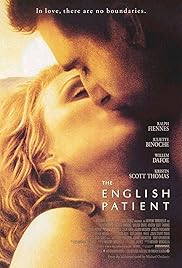
The English Patient PosterToen ik "The English Patient" voor het eerst in de bioscoop zag, ruim 20 jaar geleden, vond ik het de mooiste film die ik ooit in de bioscoop had gezien. Dat zei overigens niet zo veel, ik was toen 30 en had misschien 20 films in de bioscoop gezien. Wel was toen al duidelijk dat ik het een mooie film vond. Inmiddels ben ik 20 jaar en zo'n 1.000 films verder (verreweg de meeste op dvd), en zie ik de beperkingen van deze film wat duidelijker, maar nog steeds vind ik het een mooie film, ook nu ik hem voor de vierde of vijfde keer zag.

"The English Patient" bestaat uit twee verhaallijnen. De eerste speelt zich af in de jaren 30, deels in Caïro en deels in de woestijn en vertelt het verhaal van een avonturier van Hongaarse afkomst, graaf Laszlo von Almasy die verliefd wordt op de vrouw van een van zijn collega's tijdens een trektocht door de woestijn.

De tweede verhaallijn speelt zich af in Italië in 1943 en 1944, en laat zien hoe een gewonde man, wiens gezicht geheel verbrand is, liefdevol wordt verzorgd door een verpleegster. Daar tussendoor speelt een liefdesverhaal tussen Hana, de verpleegster, en Kip, een Indiër, die werkt bij de mijnopruimingsdienst.

"The English Patient" is oogstrelend mooi gefilmd. Vooral de scènes die zich afspelen in de woestijn zijn prachtig om naar te kijken. Er komen twee mooie vrouwen voor in de film en de muziek die ter begeleiding klinkt is aangenaam om te horen. Een film die met vakmanschap gemaakt is, maar vooral ook een film om het grote publiek te behagen. Dat is dan ook eigenlijk mijn enige bezwaar tegen de film, het is allemaal wel een beetje te gelikt. Maar "The English Patient" is toch een mooie film, voor wie hiervoor open staat.

Op IMDB krijgt "The English Patient" van ruim 160.000 mensen een waardering van 7,4.


Reacties op dit blog zijn meer dan welkom.

donderdag 7 september 2017

Geoffrey Moorhouse: The fearful void


Product DetailsIn oktober 1972 begint Moorhouse aan een tocht in de lengte door de Sahara, van Mauretanië tot aan de Nijl bij Luxor in Egypte.

Deze tocht is nog door niemand voor hem gemaakt. Als voorbereiding op zijn monstertocht spreekt hij met enkele vermaarde woestijnreizigers zoals de Fransman Monod en de Engelsman Wilfred Thesiger. Beiden raden hem af om het in zijn eentje te proberen wat hij eerst van plan was. Verder leert hij Arabisch spreken en went hij zich in de Londonse Zoo aan de omgang met kamelen. Eenmaal onderweg blijkt hij nogal afhankelijk van zijn gidsen voor het omgaan met de kamelen en het vinden van de juiste route.

Het boek beschrijft prachtig wat er allemaal komt kijken bij een kamelentocht door de woestijn en ook hoe de omgang tussen Moorhouse en zijn gidsen verliep. Uiteindelijk haalde Moorhouse Tamanrasset in Algerije waar hij van de rest van zijn tocht afzag.

Een aantal citaten:
- These people concealed so little from each other. My people concealed so much.

- I had some time since shed the innocent notion that the purchase of camels was comparable to buying a motorcar in Europe, merely a matter of identifying a salesman, discussing the matter with him for an hour of two, handing over the cash, then driving the vehicle away.  Most of the animals owned by the men of Chingueti were grazing in pasture halfway back to Atar; it would take days to fetch them and more days to talk bout them before ever a price was agreed.

- The most eagerly awaited moments were those at midday and evening when we drank the first glass of swet and syrupy tea, knowing that there were two more to come, each loaded with properties that would restore energy to our wilting bodies.

- Everything in these nomadic lives was bent towards a preoccupation with food, for man and beast alike. There is a word, ghudda, which in Arabic can be translated variously as "lunch" or "vegetables" or "greens", but which in Hassaniya is an omnibus expression for food of any kind, for feeding, for whatever represents the antidote to hunger. Whenever men talked together in this undernourished land, for however long they talked, you could be sure that the word ghudda would be uttered by one person or another every few sentences.

- Once, as we started eating our midday meal, ould Mohammed looked up at the whistling noise above. "How is it," he asked, "that an aircraft can find it's way when it doesn't have a guide?" He was unconvinced when I told him that it relied, as we had done for most of the time, upon the much derided compass.

- Then a small boy was running towards me, trying not to spill what was in the bowl. The water in it was the colour of diluted blood. This was the most beautiful thing in the world, more beautiful by far than the stained glass of Chartres, than a fugue by Bach, than the moment after ecstasy with the woman you loved, or the moment when your son scrambled to squeeze the breath out of you and say, "I think you're smashing, Dad." There was nothing in the world as beautiful as this bowlful of water.